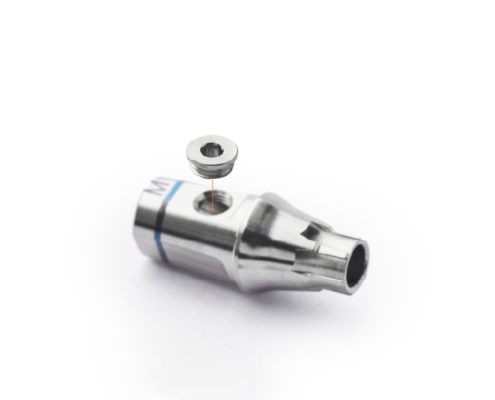
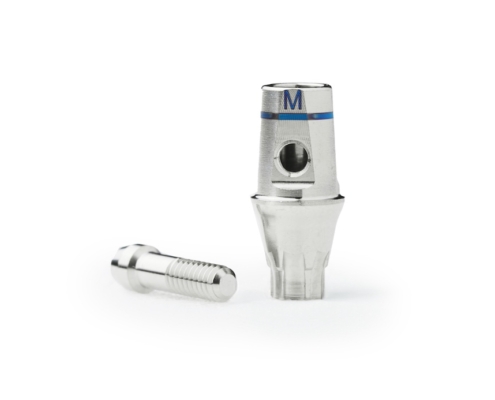
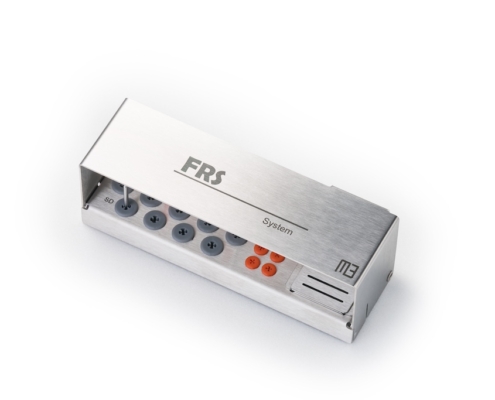
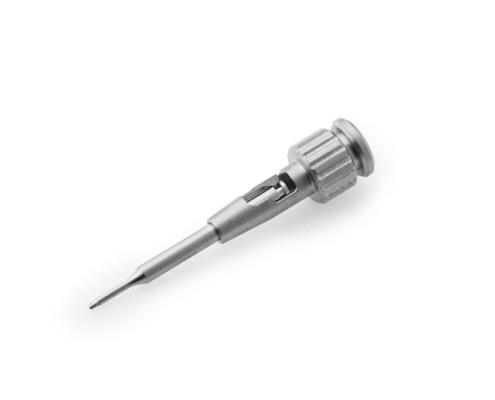





Developed in the 1990s by Japan’s implant pioneer Dr. Hiroaki Enomoto, this system utilizes the friction generated by metal-to-metal contact and applies it to implant prosthetic loading.
The concept was subsequently carried forward by Japanese dentist Dr. Takahiko Sugiyama, with support from Taiwanese dentist Dr. Ming-Ko Li. In response to current trends in all-ceramic crowns and the digitalization of implant prosthetic design, a next-generation friction retention system was developed.
The newly developed Friction Retention Screw (FRS Screw) integrates the prosthetic crown and the implant abutment into a single unit. It eliminates the need for conventional commercially available cement-retained or occlusal screw-retained designs. This system allows the crown to be periodically removed for cleaning and maintenance and then reinstalled, thereby enhancing the long-term stability of implants while achieving optimal esthetic outcomes in the anterior region.